Invoice vs Receipt: Key Differences Explained
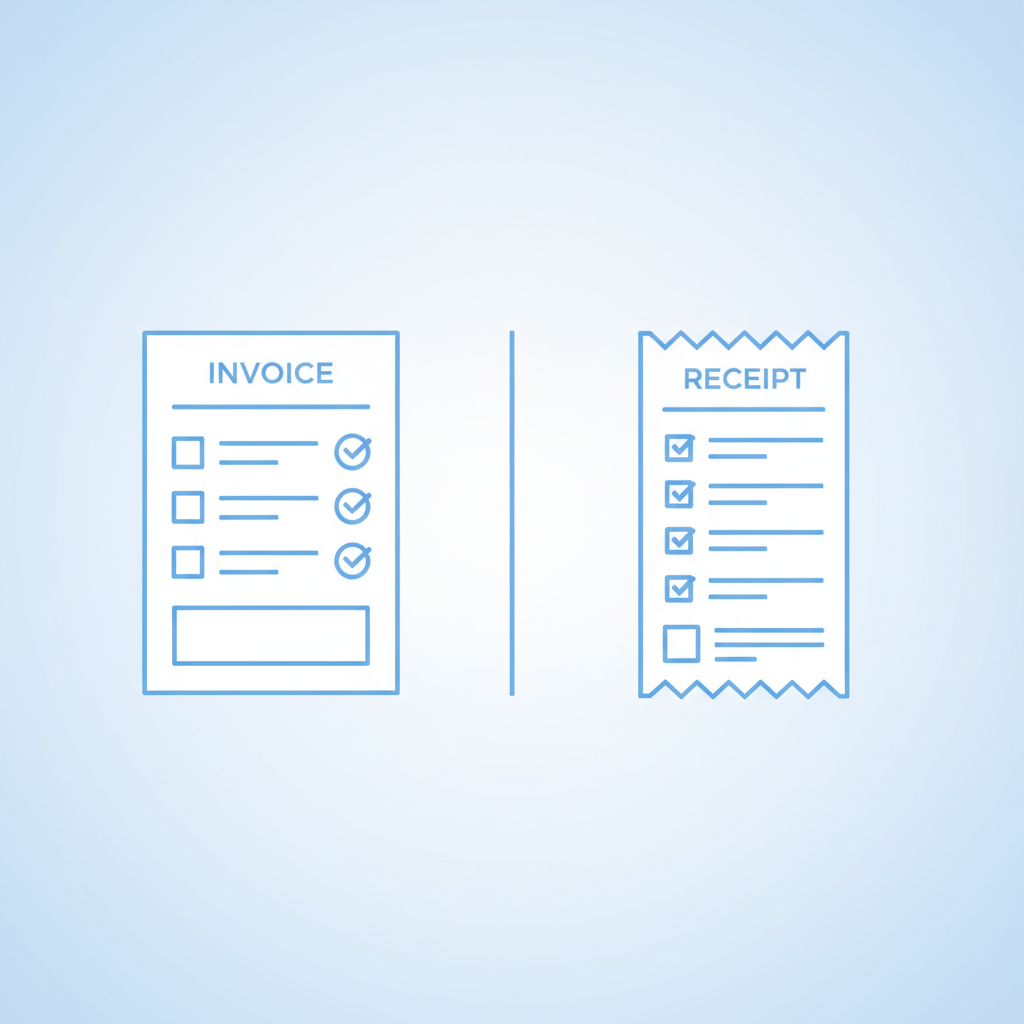
One of the most common sources of confusion in business is the difference between invoices and receipts. Many people use the terms interchangeably, but they serve different purposes and are issued at different stages of a transaction.
Understanding the distinction is crucial for maintaining proper business records, ensuring legal compliance, and managing cash flow effectively. This guide clarifies the differences and shows you when to use each one.
What Is an Invoice?
An invoice is a document issued by a seller to a buyer requesting payment for goods or services provided. It's issued before or during a transaction and acts as a request for payment.
Key Characteristics of an Invoice:
- Issued before payment is received
- Contains the amount due (not yet paid)
- Used for credit terms (pay later arrangements)
- Includes payment deadline/due date
- Essential for accounts receivable tracking
- Used in B2B transactions, subscriptions, and credit sales
Invoice Example:
receiptINVOICE #INV-2026-001
Due Date: May 30, 2026
Amount Due: $2,500

[Sent on May 12, waiting for payment]
What Is a Receipt?
A receipt is a document issued by a seller to a buyer confirming that payment has been received. It's issued after payment is complete and serves as proof of transaction.
Key Characteristics of a Receipt:
- Issued after payment is received
- Confirms the amount paid
- Provides proof of transaction
- No longer an outstanding balance
- Essential for record keeping and accounting
- Used in retail, cash transactions, and payment confirmations
Receipt Example:
receiptRECEIPT #RCP-2026-001
Date: May 20, 2026
Amount Paid: $2,500

✓ PAYMENT CONFIRMED
[Transaction completed]
Invoice vs Receipt: Comparison Table
| Aspect | Invoice | Receipt | |--------|---------|----------| | Issued When | Before/during transaction | After payment received | | Purpose | Request payment | Confirm payment | | Status | Amount is due | Amount is paid | | Use Case | Credit sales, services | Cash sales, confirmations | | Timeline | Start of transaction | End of transaction | | Key Date | Due date | Payment date | | Accounting Impact | Creates accounts receivable | Closes the transaction | | Legal Function | Billing document | Proof of transaction | | Typical Users | B2B, subscriptions | Retail, freelance, services |
When Should You Use an Invoice?
Use an invoice when:
✓ You offer credit terms — Customers pay you later (net 30, net 60, etc.)
✓ B2B transactions — Selling services or products to other businesses
✓ Subscriptions or recurring services — Monthly retainers, ongoing contracts
✓ Large projects — Work completed before payment is expected
✓ Professional services — Consulting, design, development where payment comes after work
✓ Wholesale or bulk orders — When businesses buy inventory
Example Scenarios:
- A web developer completes a website and sends an invoice due in 14 days
- A freelance writer invoices a client monthly for ongoing content creation
- A consultant bills a company after delivering a project
- A service provider sends invoices to multiple corporate clients
When Should You Use a Receipt?
Use a receipt when:
✓ Immediate payment received — Cash, card, or digital payment at point of sale
✓ Retail or e-commerce — Customer pays and immediately receives product
✓ Service confirmation — Payment received for a service delivered
✓ Professional services with upfront payment — Freelancers paid before work starts
✓ Proof of purchase needed — For warranty claims, returns, or record keeping
✓ WhatsApp or informal transactions — Quick confirmations for small payments
Example Scenarios:
- A customer buys a coffee and receives a receipt
- A freelancer sends a receipt after a client pays for a logo design
- An online store sends a receipt when an order is confirmed and payment cleared
- A consultant receives payment upfront and issues a receipt
Can Small Businesses Use Both?
Absolutely. In fact, most businesses use both invoices and receipts—they just apply to different scenarios.
Real-World Business Examples:
Restaurant Owner:
- Issues receipts to walk-in customers (payment at time of service)
- Sends invoices to catering clients who will pay after the event
Freelance Designer:
- Sends invoices to clients with payment terms (due in 7-14 days)
- Issues receipts to clients who pay deposits upfront
Consulting Firm:
- Invoices corporate clients for retainer fees (monthly billing)
- Issues receipts for one-time consultation payments received
Online Store:
- Automatically sends receipts when customers complete checkout and payment clears
- May send invoices to wholesale buyers on account
Freelance Writer:
- Invoices publications for article submissions (net 30 payment)
- Receives receipts from writing platforms for royalties paid
The key is using the right document for each situation. This keeps your accounting clean and your customers informed.
Frequently Asked Questions
Is a receipt proof of payment?
Yes. A receipt is the primary proof that payment has been received. It documents the transaction, amount paid, date, and method of payment.
Can an invoice replace a receipt?
Not entirely. An invoice documents what is owed. A receipt documents what has been paid. For complete transaction records, you need both: the invoice shows the agreement, and the receipt shows it was paid.
Do freelancers need receipts?
Yes. Even if you're a solo freelancer, issuing receipts to clients who pay upfront is professional and provides documentation for both parties. You also receive receipts from vendors and service providers.
Can I generate invoices and receipts online?
Definitely. Tools like Receep allow you to create, customize, and send both invoices and receipts instantly. You can generate them in seconds, download as PDF, or share via email and WhatsApp.
What if I issued an invoice but received full payment immediately?
Issue a receipt to confirm the payment. You can note "Invoice INV-001 Paid In Full" on the receipt for clear record keeping.
Manage Both Invoices and Receipts With Receep
Modern business requires both invoices and receipts. Whether you're requesting payment or confirming it's been received, having the right document matters.
Receep makes it simple to create both—with professional templates, instant PDF generation, and the ability to send via email or WhatsApp.
Start managing your payments professionally today:
Create Your First Invoice or Receipt →
Related Resources
Ready to create professional documents?
Join 50,000+ businesses using Receep to send receipts, invoices and proof of payment in seconds.
Related articles

Estimate vs Quote: What's the Difference?
An estimate is an approximate cost calculation; a quote is a fixed-price offer. Learn the legal, commercial, and practical differences — and when to use each one.
What Is Proof of Payment? Definition, Types & Templates
Proof of payment is more than just a receipt — it's the documentation that a financial transaction was completed. Here's everything you need to know.
How to Write a Receipt: Complete Guide with Examples
A proper receipt protects you legally, builds trust with clients, and keeps your books clean. Here's everything you need to know about writing receipts correctly.